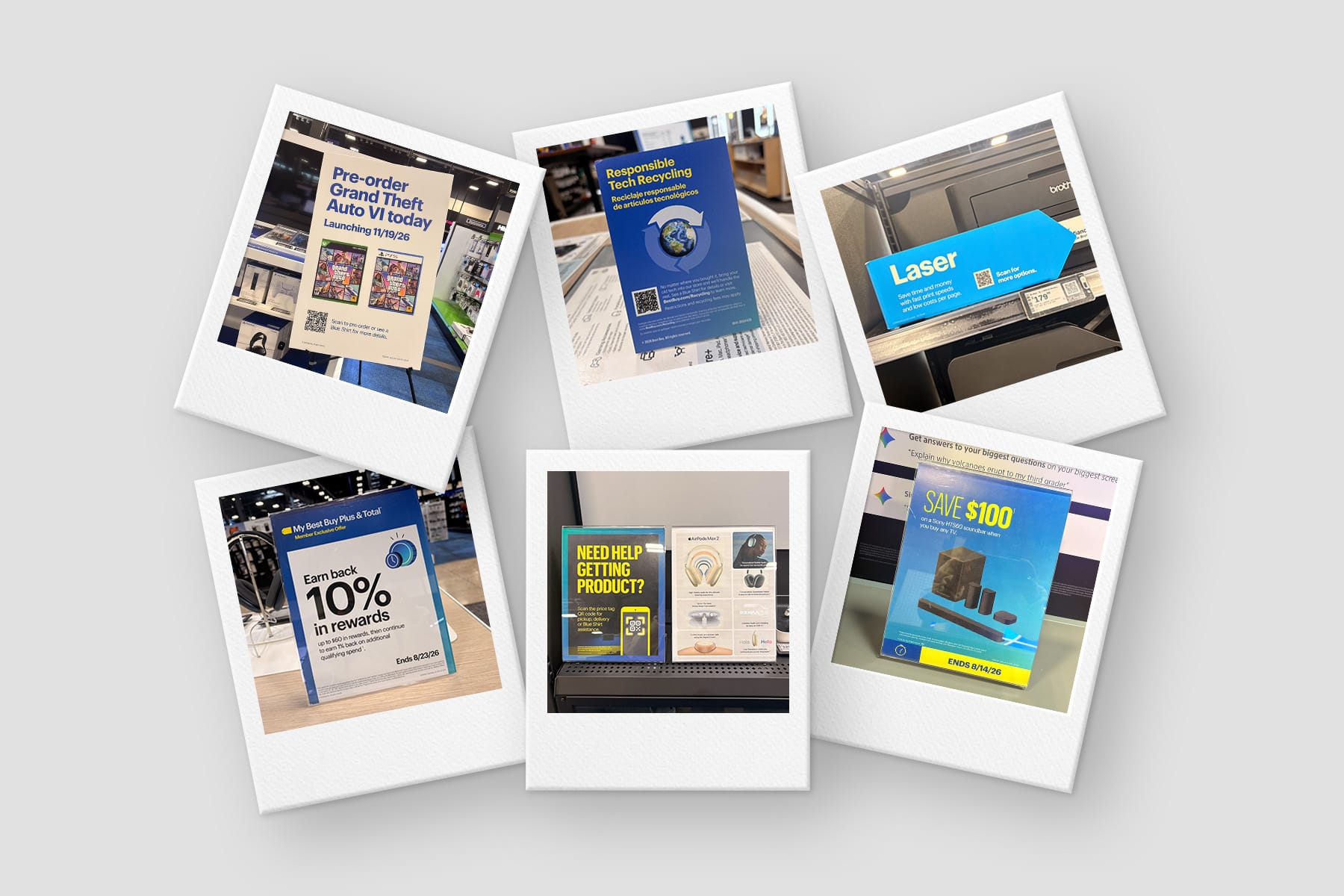
Best Buy Store Experience Design
Best Buy is a leading consumer electronics retailer founded in Minnesota in 1966, with stores across the United States and Canada. Its in-store experience uses signage, environmental graphics, and promotional messaging to help customers navigate products, services, and offers throughout the store.
As a Production Designer on the Store Experience Design team, I partnered with designers, project managers, legal partners, and production artists to bring in-store creative through production. I typically managed 10–12 files per week, with peak periods reaching 16–18, often across multiple projects and signage types at once. My role was to make sure every file was accurate, consistent, and ready for production while keeping the original design intact.
My work included owning temporary and permanent signage projects as well as taking designers’ files through the final stages of production. For production turnover, I checked color accuracy, production specs, substrates, file slugs, typography, imagery, pricing, SKUs, offer details, disclaimers, legal copy, and overall consistency. I worked with project managers and legal partners to resolve questions and partnered with the production manager to confirm substrates and specifications before files were released. I also presented secondary holiday kit work during internal creative reviews, took feedback from designers, and made revisions before final production. To stay organized and avoid reinventing the wheel, I created a Miro archive of past projects I could reference and an Excel tracker to manage assignments, deadlines, and project status.
My attention to detail helped me catch inconsistencies and production issues before files moved forward, improving the overall quality and accuracy of the work. Bringing production work in-house also gave leadership a clearer picture of how much work was moving through the team and helped manage the number of promotional offers being produced. The experience played to what I do best as a production designer: untangling complex projects, catching the tiny details, and finding ways to make creative production more accurate, organized, and efficient.
One of my biggest takeaways from Best Buy was how important clear, repeatable processes are in high-volume production. With designers, project managers, legal partners, and other production artists all touching the work, established workflows helped keep everyone aligned and catch issues before they reached stores. I also learned that strong production design is about more than getting the details right. It is understanding how those details connect across the entire process and finding ways to make that process work better.